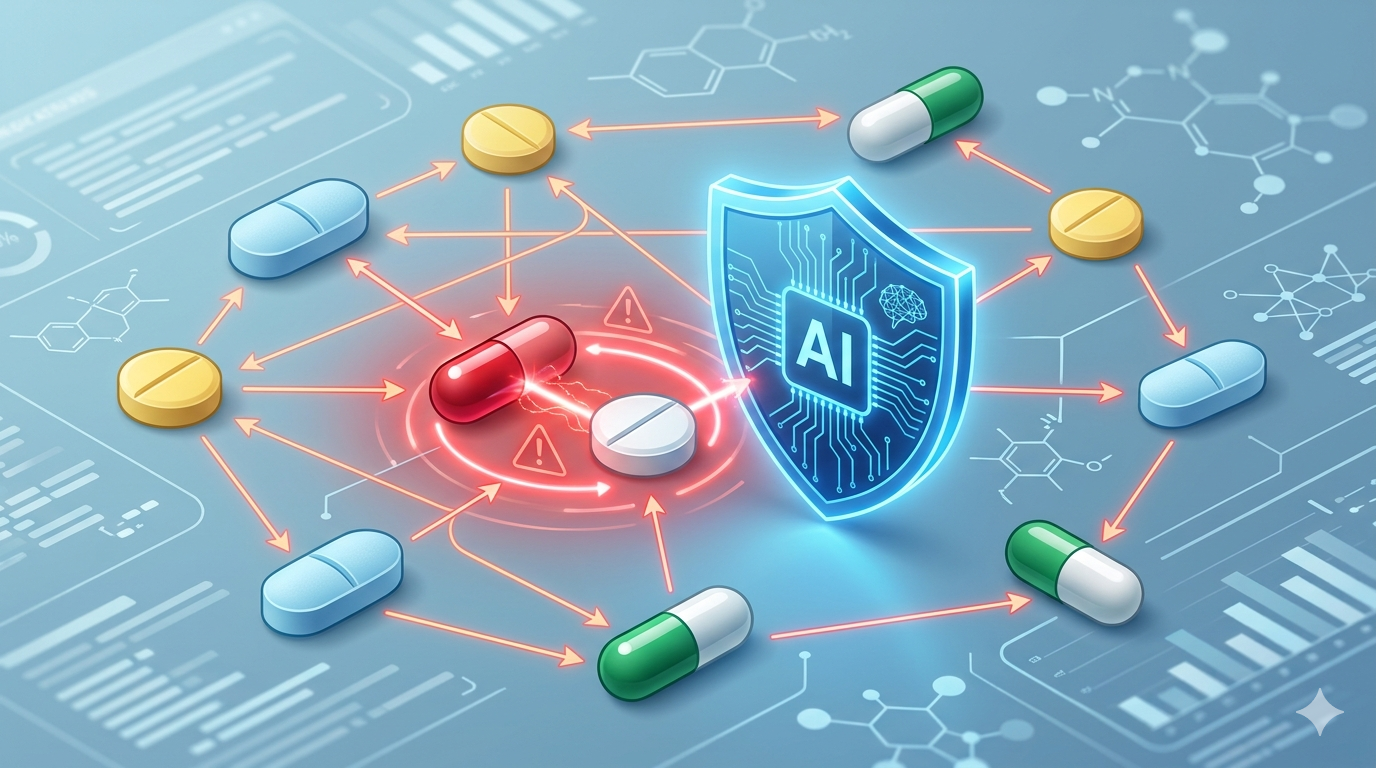
Drug Interactions: Why Your System Should Alert You Before Signing the Prescription
A 68-year-old patient with controlled hypertension, type 2 diabetes, and osteoarthritis comes in for knee pain. The physician prescribes an anti-inflammatory (NSAID). The patient is already taking metformin, enalapril, and low-dose aspirin. The combination of NSAID + enalapril + aspirin significantly increases the risk of acute renal failure and gastrointestinal bleeding.
Did the physician know this? Probably yes, in the abstract. Did they remember it at the moment of consultation, between 15 patients with their respective comorbidities and polypharmacy? Not necessarily.
This is not a problem of medical competence. It is a problem of information volume. The FDA's drug interaction database records thousands of known combinations with different severity levels. No human being can memorize all possible combinations between the medications their patients are already taking and the ones they plan to prescribe.
The problem is real and measurable
Adverse drug reactions are one of the leading causes of preventable hospitalization worldwide. A significant percentage of these reactions are due to interactions between medications the patient was already taking and a new one that was prescribed.
The risk grows exponentially with polypharmacy. A patient taking 2 medications has low risk. One taking 5 has moderate risk. One taking 8 or more — like many elderly adults with multiple chronic conditions — has a high risk of clinically significant interactions.
The physician who sees 20 polypharmacy patients a day faces an impossible cognitive task: remembering all medications of each patient, mentally cross-referencing them against the new one they want to prescribe, evaluating the severity of each potential interaction, and making an informed decision. All in the 15-20 minutes the consultation lasts.
How the alert should work
A well-designed drug interaction alert system works transparently:
At the moment of prescribing, when the physician selects or types the new medication, the system cross-references that drug against the patient's current medication list.
If it detects a known interaction, it shows an alert with the severity level (mild, moderate, severe), the description of clinical risk, and the recommendation (monitor, adjust dose, consider alternative, absolute contraindication).
The physician decides. The alert does not block the prescription — it informs. The physician can proceed if they consider the benefit outweighs the risk, or they can choose an alternative. The clinical decision always belongs to the physician.
The alert is recorded. If the physician proceeds despite a severe interaction alert, that is documented in the patient record. This protects the physician: it demonstrates they were informed of the risk and made a conscious clinical decision.
The database matters
Not all drug interaction databases are equal. Alert quality depends directly on the quality and completeness of the underlying data.
The most reliable sources for drug interactions are databases curated by regulatory authorities and recognized pharmacological organizations. These databases contain thousands of drugs with their documented interactions, classified by severity and backed by clinical evidence.
What matters is that the database is regularly updated (new medications generate new interactions that must be documented) and that the severity classification is clinical, not merely theoretical.
The problem of "alert fatigue"
A system that alerts for everything ends up alerting for nothing. If every prescription generates 3 low-relevance alerts, the physician learns to ignore them all — including the ones that actually matter.
Alert design must be intelligent:
Severe alerts — always visible, require explicit acknowledgment from the physician. They are few and are the ones that can truly cause harm.
Moderate alerts — visible but not intrusive. The physician sees them and decides.
Mild alerts — available in the prescription detail but not as a pop-up. They are informational, not decisional.
This gradation reduces alert fatigue and ensures that when the system truly alerts, the physician pays attention.
Integration with the clinical record
Interaction alerts are most useful when integrated with the patient's complete clinical record. Not just current medications but also recorded allergies, chronic conditions that may affect the metabolism of certain drugs, and renal or hepatic function if documented.
An isolated system that only cross-references "new drug vs current drug list" loses context. An integrated system can alert that the patient has documented chronic renal insufficiency and that the prescribed drug requires dose adjustment in patients with diminished renal function.
Why current systems don't do this
Most electronic health record systems in Mexico do not include drug interaction alerts for several reasons:
They don't have access to a quality pharmacological database. Curated databases have licensing costs that many providers don't absorb.
Integration is complex. Having the database isn't enough — you need to implement real-time cross-referencing, severity classification, the alert interface, and decision recording.
It's not a feature physicians explicitly demand. Many physicians don't know this functionality is possible because they've never seen it in a clinic system.
Medicus: alerts integrated with AI
At Leeuwwolk we developed Medicus with drug interaction alerts integrated from the architecture. The database contains thousands of drugs with their interactions classified by severity.
When the physician prescribes — whether manually or through the AI-generated SOAP note from the consultation transcription — the system automatically cross-references against the patient's current medications and alerts if there are relevant interactions.
Alerts are integrated with the complete clinical record, including allergies, active diagnoses, and medical history. Leeuwwolk guarantees the privacy of patient data: encryption in transit and at rest, without sharing information with third parties or sending it to public AI services.
→ Learn about Medicus and prescribe with complete information
Leeuwwolk is a Mexican company specializing in private artificial intelligence for the healthcare sector.