How a Contract Sealed on Blockchain Has the Same Force as a Notarized Document
It sounds exaggerated, but it isn't. The National Code of Civil and Family Procedures, in its Article 350, establishes that information generated, communicated, or archived through blockchain or other distributed ledger technologies constitutes full proof.
Full proof is the highest level of evidentiary weight in Mexican procedural law. It is the same category as notarized documents, notarial instruments, and judicial confessions. It is not evidence the judge "may consider" — it is evidence the judge is obligated to value as true, unless the contrary is proven.
And proving that a public blockchain was compromised is, for practical purposes, impossible.
What full proof means
In the Mexican procedural system, evidence is classified by its evidentiary weight. Not all evidence carries the same value:
Free proof — the judge values it at their discretion. A printed email, a testimony, a photograph without context. The judge may believe it or not.
Full proof — it stands on its own merit. The judge values it as true unless the opposing party demonstrates its falsity. Notarized documents, notarial instruments, judicial confessions, and now, information on blockchain.
The practical difference is enormous. If you present a printed contract as evidence, the opposing party can object by claiming it was fabricated or altered. The judge must evaluate the objection and may dismiss your evidence.
If you present a contract whose digital fingerprint is registered on a public blockchain, the opposing party must prove that the blockchain was compromised to dismiss your evidence. Given that a public blockchain like Polygon has thousands of nodes distributed globally, proving it was compromised is practically impossible.
What exactly Art. 350 says
Article 350 of the CNPCF is part of the new civil procedural framework that Mexico has been adopting. It explicitly recognizes blockchain as a valid technology for generating full proof.
The article establishes that information generated, communicated, received, or archived through blockchain or other distributed ledger technologies shall have the evidentiary value of full proof, provided the reliability of the method used to generate, communicate, receive, or archive said information is demonstrated.
The key is in "demonstrating the reliability of the method." For a decentralized public blockchain (such as Polygon, Ethereum, or Bitcoin), reliability is given by the very nature of the network: thousands of independent nodes that verify each transaction, immutable records that cannot be altered retroactively, and total transparency that allows anyone to verify any record.
How blockchain sealing works
The process of sealing a document on blockchain is conceptually simple:
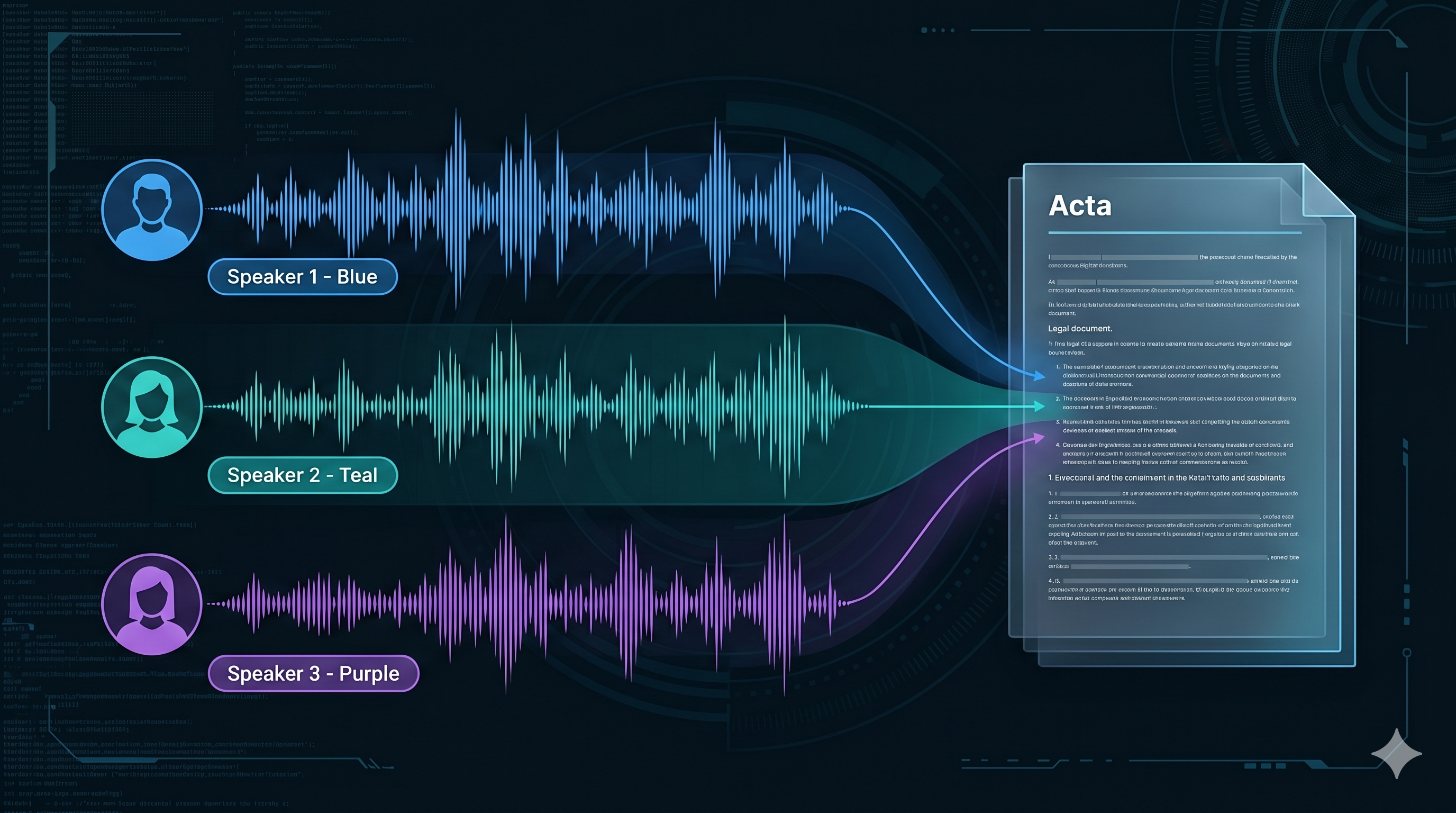
The document's digital fingerprint is calculated. Using the SHA-256 algorithm (the same one Bitcoin uses), a 64-character hexadecimal string is generated that is unique to that specific document. Any change to the document — adding a space, changing a comma, modifying a date — generates a completely different fingerprint.
The fingerprint is recorded on the blockchain. The fingerprint (not the document) is sent as part of a transaction to the public blockchain. The transaction is recorded with the exact date and time in a block that is verified by thousands of nodes.
The transaction is immutable. Once confirmed, the transaction cannot be altered or deleted. It remains on the blockchain forever. Anyone with network access can verify that fingerprint was registered at that moment.
The important thing: the document is never uploaded to the blockchain. What is recorded is its digital fingerprint. It is mathematically impossible to reconstruct the document from its fingerprint. The document's content remains private — only whoever has the original document can verify that it matches the registered fingerprint.
The reversed burden of proof
This is the most powerful aspect of Art. 350 for practical purposes. When you present evidence on blockchain and the opposing party challenges it, the burden of proving the evidence is false falls on the challenger.
To discredit evidence on blockchain, the opposing party would have to demonstrate one of these things:
That the digital fingerprint was not calculated correctly (independently verifiable by any computer).
That the transaction does not exist on the blockchain (verifiable by anyone consulting the public network).
That the blockchain was compromised and records were altered (practically impossible for public blockchains with thousands of nodes).
That the presented document does not correspond to the registered fingerprint (verifiable by calculating the document's fingerprint and comparing it with the record).
Each of these objections is objectively verifiable. It does not depend on testimonies, interpretations, or judicial discretion. They are mathematical and cryptographic facts.
Public blockchain vs private blockchain
Not all blockchains are equal for evidentiary purposes. The key distinction is between public and private blockchains.
Public blockchain (Polygon, Ethereum, Bitcoin) — anyone can verify any transaction. Nodes are operated by thousands of independent entities worldwide. No one controls the network. Records are immutable because altering them would require compromising the majority of nodes simultaneously.
Private blockchain (Hyperledger, corporate blockchains) — only authorized participants can see and verify transactions. Nodes are operated by a single entity or a closed consortium. Records are only as reliable as the entity operating the network.
For full proof purposes, public blockchain is significantly stronger. A judge can independently verify a transaction on Polygon or Ethereum. They cannot do the same with a private blockchain without the operator's cooperation.
Combination with electronic signature
Blockchain sealing certifies what existed and when. The electronic signature certifies who approved it. The combination of both generates the most complete evidence possible:
Blockchain alone — "This document existed on May 15, 2026 with this exact content." Full proof under Art. 350.
e.firma alone — "Juan Pérez (RFC PEJX800101XX1) signed this document." Legal validity under Arts. 89-114 Commercial Code.
e.firma + blockchain — "Juan Pérez signed this document on May 15, 2026, and neither the document nor the signature have been altered since." Maximum evidentiary weight.
SureSeal: sealing on public blockchain with e.firma
At Leeuwwolk we developed SureSeal to make public blockchain sealing with electronic signature accessible. You seal your document, it is recorded on Polygon, a certificate with a public verification QR code is generated. All in seconds, at a fraction of the cost of a notary.
Verification is done without uploading the document — the fingerprint is calculated in the browser and compared against the blockchain record. Total privacy.
→ Learn about SureSeal and give your documents full evidentiary weight
Leeuwwolk is a Mexican company specializing in digital signatures and blockchain sealing for businesses.